Wikipedia article
Azure Bluet
Houstonia caerulea, commonly known as azure bluet, Quaker ladies, or bluets, is a perennial species in the family Rubiaceae. It is native to eastern Canada (Ontario to Newfoundland) and the eastern United States (Maine to Wisconsin, south to Florida and Louisiana, with scattered populations in Oklahoma). It is found in a variety of habitats such as cliffs, alpine zones, forests, meadows and shores of rivers or lakes.
Description
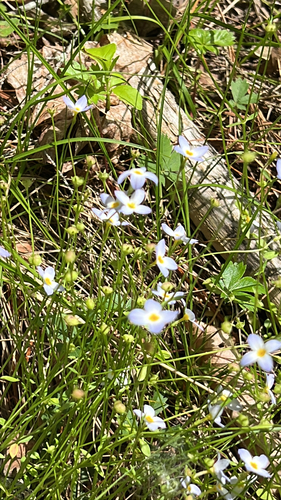
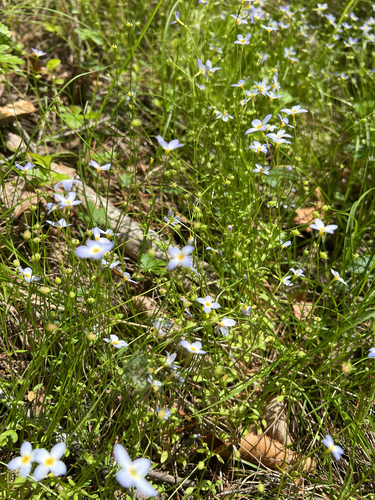
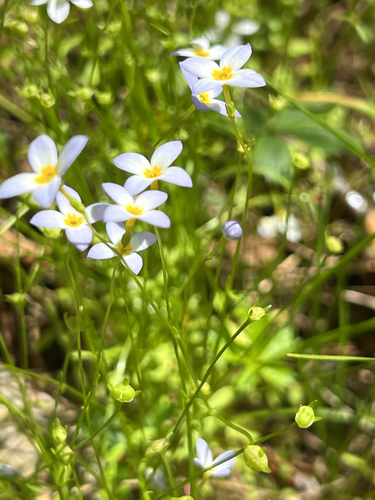
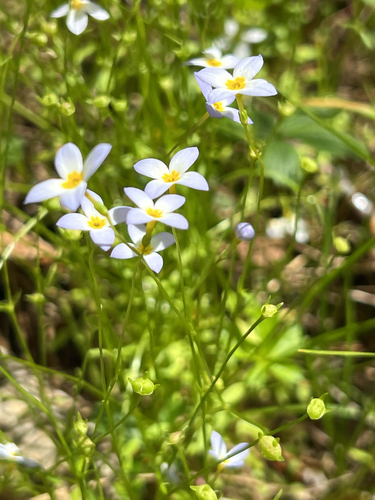
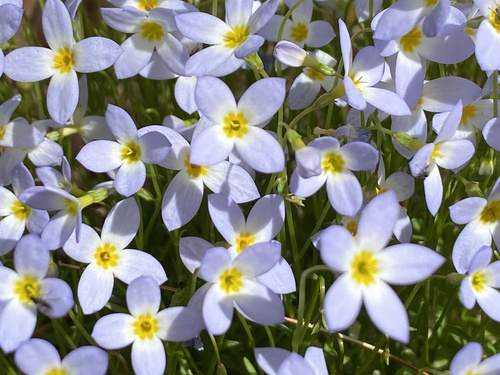
Houstonia caerulea is a perennial herb that produces showy flowers approximately 1 cm (0.39 in) across. These flowers are four-parted with pale blue petals and a yellow center. The foliage is a basal rosette with spatula-shaped leaves. Stems are up to 20 cm (7.9 in) tall with one flower per stalk. Leaves are simple and opposite in arrangement with two leaves per node along the stem. It thrives in moist acidic soils in shady areas, growing especially well among grasses.
Gallery
References
Further reading
Pink, A. (2004). Gardening for the Million. Project Gutenberg Literary Archive Foundation. Blanchan, Neltje (2005). Wild Flowers Worth Knowing. Project Gutenberg Literary Archive Foundation.
External links
Bluet Archived 2021-04-10 at the Wayback Machine gardening information Houstonia caerulea photo USDA PLANTS Profile Ladybird Johnson Wildflower Center